Texto disponible en castellano/ Text available in English
EL HORRU DE LA VILLA (siglo XVI)
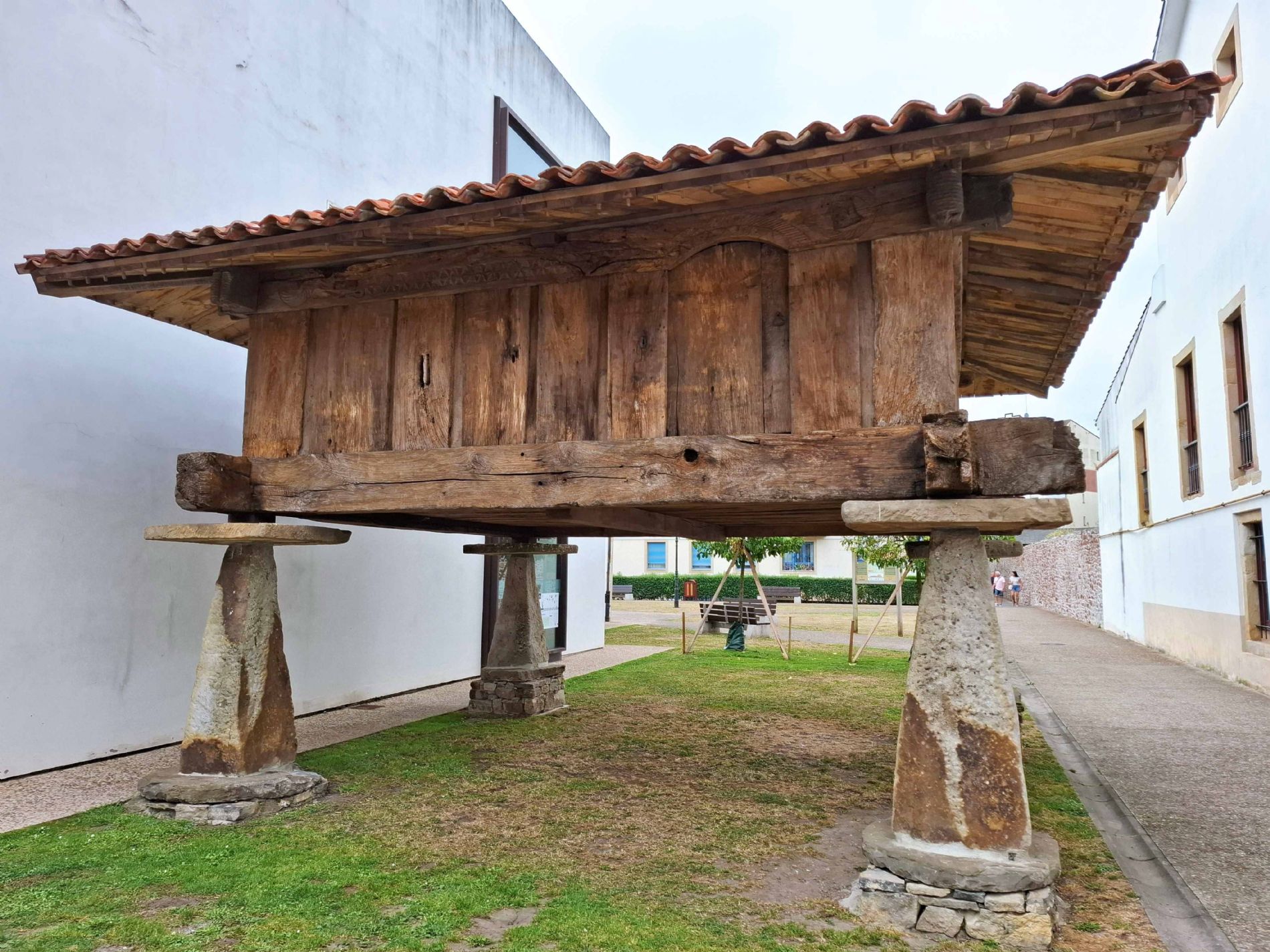
Detenerse ante el Horru de la Villa es viajar más de quinientos años atrás y descubrir uno de los grandes símbolos de la arquitectura tradicional asturiana. Este excepcional hórreo, construido entre finales del siglo XV y comienzos del XVI, fue trasladado desde la parroquia de Bedriñana y recuperado en 2026 para devolver al corazón histórico de Villaviciosa una parte esencial de su memoria.
Su exquisita decoración tallada en madera, inspirada en motivos geométricos y de tradición románica, lo convierte en una de las piezas etnográficas más valiosas del concejo. Pero su importancia va mucho más allá de su antigüedad: representa la estrecha relación entre la vida cotidiana, la agricultura y el patrimonio que durante siglos definió el paisaje urbano de la antigua Pola de Maliayo.
Situado junto a la Casa de los Hevia, donde se alojó el futuro emperador Carlos V tras su desembarco en Tazones en 1517, el Horru de la Villa recupera el lugar que este tipo de construcciones ocuparon en la historia de Villaviciosa, invitando al visitante a contemplar un legado que sigue formando parte del alma de Asturias.
ENGLISH
EL HORRU DE LA VILLA (siglo XVI)
Stopping at the Horru de la Villa is like stepping back more than five centuries and discovering one of the finest symbols of traditional Asturian architecture. This remarkable horru (traditional Asturian granary), built between the late 15th and early 16th centuries, was relocated from the parish of Bedriñana and carefully restored in 2026, bringing an essential part of Villaviciosa’s heritage back to the heart of its historic centre.
Its exquisite carved wooden decoration, inspired by geometric motifs and the Romanesque tradition, makes it one of the municipality’s most valuable examples of vernacular heritage. Yet its significance goes far beyond its age: it reflects the close relationship between everyday life, agriculture and cultural heritage that shaped the urban landscape of the old Pola de Maliayo for centuries.
Standing beside the Casa de los Hevia, where the future Emperor Charles V stayed after landing at Tazones in 1517, the Horru de la Villa restores the prominent place that these traditional structures once held in the history of Villaviciosa. Today, it invites visitors to discover a living legacy that remains an essential part of the soul of Asturias.